
Summary: Wondering whether trade school or a registered apprenticeship is the better way to become an electrical worker? The short answer is that, for most people, a registered apprenticeship offers the strongest path by combining paid, hands-on training with classroom instruction. Here’s how the two options compare.
If you’re thinking about becoming an electrical worker, you’ve probably come across two common paths: trade school and a registered apprenticeship.
While both can teach electrical concepts, they aren’t the same.
If your goal is to become a skilled electrical worker, earn a paycheck while you train, and start your career with years of real-world experience, a registered apprenticeship is the better choice for most people. Here’s why.
Trade School vs. Apprenticeship: What’s the Difference?
Both trade schools and registered apprenticeships are designed to prepare people for careers in the electrical industry. The biggest difference is how the training is delivered.
Trade schools are primarily classroom-based. Students spend most of their time learning electrical theory, safety practices, code requirements, and other technical concepts through lectures and lab exercises.
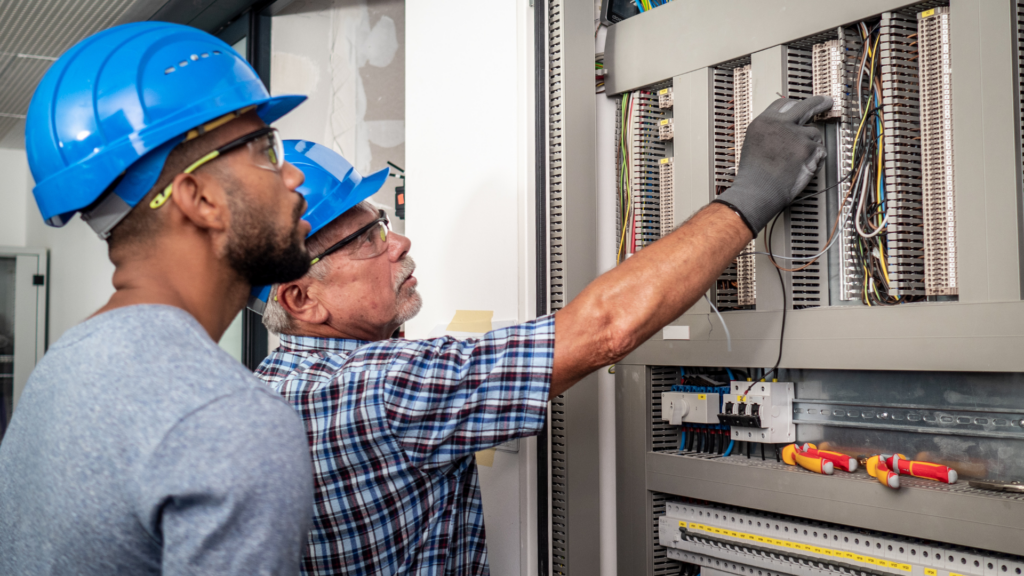
Registered apprenticeships combine classroom and lab instruction with paid, on-the-job training. Apprentices learn those same core concepts while working alongside experienced electrical workers and applying what they’re learning in the field.
From there, the two paths begin to look very different.
Why Start with a Registered Apprenticeship?
If your goal is to build a long-term career as an electrical worker, a registered apprenticeship offers many advantages. From earning a paycheck while you train to gaining real-world experience from day one, here’s why it’s the path many electrical workers choose:
- You Earn While You Learn. Instead of paying tuition and hoping to find a job afterward, you’re earning a paycheck throughout your training. As your skills grow, so does your pay.
- You Receive a Comprehensive Education. Registered apprenticeships combine classroom and lab instruction with hands-on training, so you’re learning electrical theory, safety, code requirements, blueprint reading, and other essential skills while applying those learnings immediately on real job sites.
- You Build Experience Employers Value. Throughout your apprenticeship, you’ll work alongside experienced mentors, tackle real projects, and build thousands of hours of practical experience that employers look for.
- You’re Preparing for the Next Step. While licensing requirements vary by state and local jurisdiction, registered apprenticeships are designed to provide the classroom education and supervised work experience that many jurisdictions require. Instead of piecing those requirements together on your own, you’re building them throughout your training.
What About Trade School?
Trade school can be a good option for students who prefer a classroom-first learning environment. It provides a strong foundation in electrical theory and other core concepts, but it’s important to understand what it does, and doesn’t, provide:
- You’ll Pay for Your Education. Most trade schools charge tuition, along with fees for books, tools, and other supplies. For many students, it’s a worthwhile investment, but it’s a cost to consider as you compare your options.
- The Focus Is on Classroom Learning. Trade school gives you a strong understanding of electrical concepts through classroom instruction and lab work, but little hands-on experience. In trade school, you’re learning more of the “why” and less of the “how.”
- You’ll Still Need Real-World Experience. Employers are often looking for electrical workers who have practical, on-the-job experience. After graduating from trade school, many students still need to find an employer where they can continue developing their skills through supervised work.
- Graduation Isn’t the End of the Journey. Completing trade school doesn’t automatically qualify you to become a licensed electrical worker. Licensing requirements vary by state and local jurisdiction, but they generally require a combination of classroom education and supervised work experience. For many students, trade school is an important first step, not the final one.
Which Path Is Better?
Both trade school and registered apprenticeships can help you begin a career in the electrical industry but, for most people, a registered apprenticeship offers the strongest foundation for long-term success.
If you’re looking for the fastest way into the industry, trade school may be the better fit. But if you’re looking at building a long-term career as an electrical worker, a registered apprenticeship is hard to beat. It takes longer because you’re not just learning the trade, you’re building the experience, skills, and confidence that will serve you throughout your career.
No matter which path you choose, the important thing is to get started. The electrical industry offers rewarding, in-demand careers for people who are ready to learn and put their skills to work.
Ready to Start a Registered Electrical Apprenticeship?
If a career as an electrical worker sounds like the right fit for you, there’s no better time to get started. A registered apprenticeship gives you the opportunity to earn a paycheck, learn from experienced mentors, and build skills that can last a lifetime.
Explore how registered electrical apprenticeships work, find opportunities near you, and take the first step toward a rewarding career. Get Started Today!