
If you’re just starting out in the electrical trades, or you’re thinking about joining the electrical trades, you might be wondering what the future looks like. Can you actually build a career here? Will you be doing the same job for thirty years, or is there room to grow?
The good news is that the electrical trades offer one of the clearest career paths of any profession out there. There’s a real structure, real milestones, and real opportunities to earn more and take on more responsibility over time.
Here’s how it works, from your first day as an apprentice all the way through the senior levels of the trade:
It Starts with a Registered Apprenticeship
Almost every electrical worker’s career begins with a registered apprenticeship, which is a paid position that combines on-the-job training with classroom and lab instruction.
Apprentices work alongside experienced electrical workers on real job sites from day one, earning wages while building the kind of hands-on knowledge that only comes from doing the work.
Apprenticeships typically last four to five years, and wages increase with each year of the program. By the final year, most apprentices are earning close to journeyworker pay. When it’s over, graduates don’t just have a certificate – they have thousands of hours of real-world experience behind them and money in their pockets.
Move up to a Journeyperson Role
Completing an apprenticeship opens the door to the journeyworker license, which is earned by passing a state licensing exam. Requirements vary by state, but most require proof of apprenticeship hours alongside a written test covering the National Electrical Code and electrical theory.
A journeyworker license means the ability to work without direct supervision on most tasks, which makes a licensed journeyworker significantly more valuable in the field and typically leads to a meaningful jump in pay. It’s the foundation that the rest of an electrical career is built on.
Advance to Leadership Positions
With more experience in the field, many electrical workers move into leadership roles — foreperson, general foreperson, and supervisor — and this is where a career starts to look meaningfully different. The focus shifts from individual tasks to the success of the whole team. That means leading a crew, managing the daily flow of work on a job site, keeping projects on schedule, and making sure safety standards are followed at every stage. As electrical workers advance from foreperson to general foreperson and beyond, their scope expands, with oversight of multiple crews and closer coordination with project management and contractors.
What separates the workers who earn these roles isn’t just technical knowledge; it’s how they work with people. Clear communication, staying organized under pressure, and being someone a crew genuinely trusts are the qualities that tend to matter most at this level, and they’re the ones that supervisors notice over time.
Build Specialized Skills
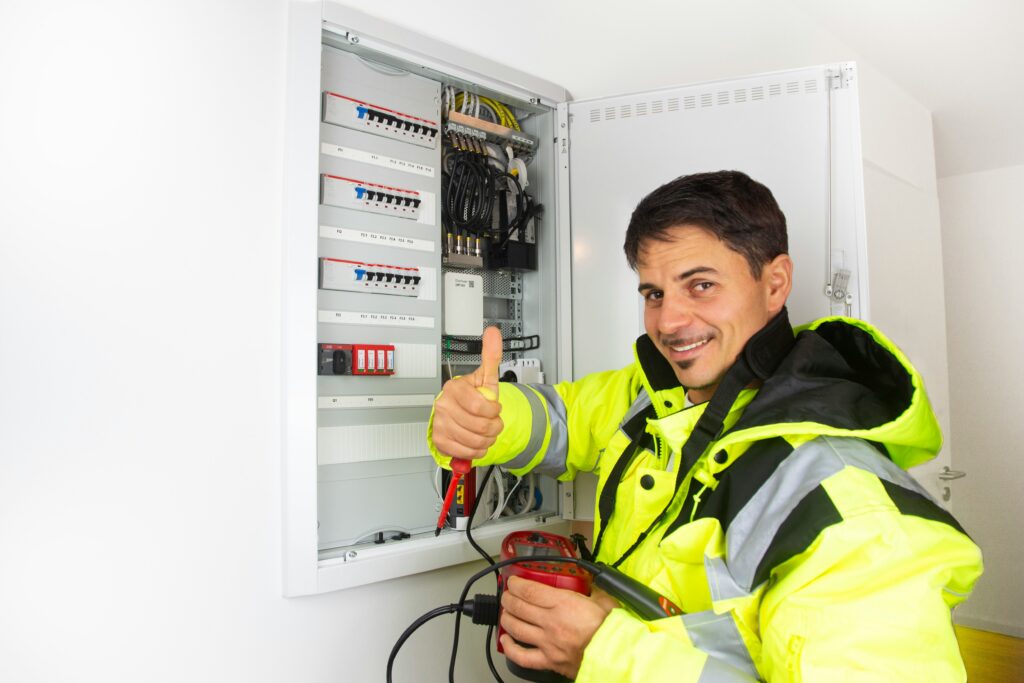
Another way to advance in the electrical trades is by developing deep expertise in a specific area of the field. The electrical industry is always evolving, and that constant change creates real opportunity for workers who are willing to keep learning.
Electrical workers who build specialized knowledge in areas like renewable energy systems, data and communications, industrial systems, or smart building technology tend to find that their options grow right along with their skills. The more an electrical worker knows, the more indispensable they become, and more doors open as a result.
Mentoring and Teaching Others
For many experienced electrical workers, a natural next step is a training or mentorship role. That might mean mentoring apprentices directly on the job, helping to teach classes at a training center, or supporting workforce development programs in a broader capacity. It’s a way to share what’s been learned over their years in the trade and help someone else get their start, which for many electrical workers is one of the most rewarding things the career has to offer.
The Key to Moving Up
Advancement in the electrical trades doesn’t follow a single script. Some workers move up by taking on leadership, others by deepening their expertise, and others by helping to train the people coming up behind them. What the workers who succeed tend to have in common is a commitment to continuous learning, a reputation for showing up and doing quality work, and a willingness to take on more when the opportunity presents itself. The path forward looks different for everyone, but for those who stay engaged and keep growing, there’s always a next step waiting.
Ready to Start Your Electrical Career?
The electrical trades offer something that’s genuinely hard to find in other fields: a career where the work is meaningful, the wages are strong, and the ceiling is high.
Electrical workers are in demand across every sector of the economy – from commercial construction to renewable energy to industrial facilities – and that demand isn’t slowing down anytime soon.
For anyone who’s been thinking about making a move, there’s no better time to explore what the electrical trades have to offer. Learn more and get started today!