
In almost all cases, apprenticeships are full-time. Apprentices typically work 35 to 40 hours per week on job sites and complete additional classroom or lab instruction on scheduled evenings or days. Part-time options are rare because consistent, hands-on training is essential. The good news is you earn a paycheck from day one and receive raises as you progress. In this blog post, we break down what that commitment really looks like and why it pays off.
When you’re exploring a new career, knowing what it will realistically take to make that change matters. You might be balancing school, another job, or family responsibilities, and need to know what you’re signing up for.
What kind of schedule are you committing to? Can you balance it with your current responsibilities? Will you need to adjust your income or routine?
Which is why we hear this question often: are apprenticeships full-time or part-time? It’s a big and important question, especially for career changers.
The short answer is: electrical apprenticeships are full-time. But that is by design! Let’s explore why.
What Does “Full Time” Mean in Electrical Apprenticeships?
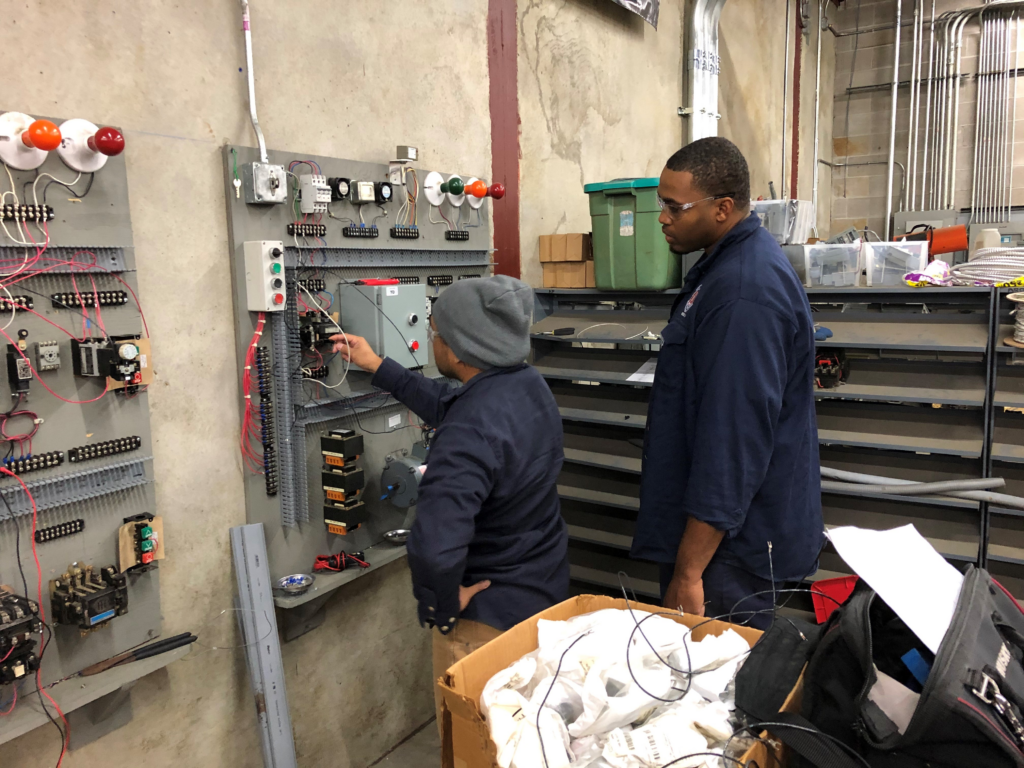
An electrical apprenticeship mirrors a full-time job. Electrical apprentices receive 35-40 hours of on-the-job training per week, just like any other full-time position in the electrical trades. That usually means:
- Working during the day on job sites
- Learning hands-on skills alongside experienced electrical workers
- Getting paid while you train
On top of your on-the-job training hours, you will also have classroom and lab instruction. This may happen:
- One or two evenings per week for a few hours
- One full day every couple of weeks
- Or another structured mix of classroom and lab instruction, depending on your program
The classroom and lab time is an important part of apprenticeship, but your main focus is working and learning on the job.
Are There Part-Time Electrical Apprenticeships?
Part-time electrical apprenticeships are rare. Because this career is hands-on and skill-based, you need consistent time on job sites to learn and develop. Employers and training programs structure apprenticeships as full-time roles so you can:
- Build skills faster
- Meet required training hours
- Progress through the program on schedule
Some programs may offer limited flexibility in certain situations, but in general, you should expect a full-time commitment.
Can You Work Another Job During an Apprenticeship?
Technically, yes. But realistically, it would be tough.
A full-time apprenticeship plus classroom and lab instruction already fills most of the week. Many apprentices find that the combination of physical work and study time leaves little room for a second job.
The good news is that apprenticeships are built around an “earn while you learn” model. As an apprentice, you are paid from day one. You are not paying tuition or waiting years to gather knowledge before you can start earning. Instead, you are:
- Receiving a steady paycheck
- Gaining real-world experience
- Earning scheduled pay increases as you complete training milestones
Because apprentices earn as they learn, many find that they don’t need a second job. The program is designed to help you support yourself while building your career.
Are Apprenticeships Worth the Time Commitment?
Apprenticeship is a big commitment – it will take your time, your focus, and your effort. You’ll work during the day and spend time in the classroom beyond that. It’s certainly not something to jump into casually.
But what you get in return – steady pay from day one, increasing wages as you gain skills, and a clear path into a respected, in-demand career – is absolutely worth it. A few years of focused commitment can lead to a long, fulfilling, and successful career.
Think you’re ready to make the commitment? Take the first step today.